Before and After Hair Transplant Photos: Why Professional Photography Converts More Patients
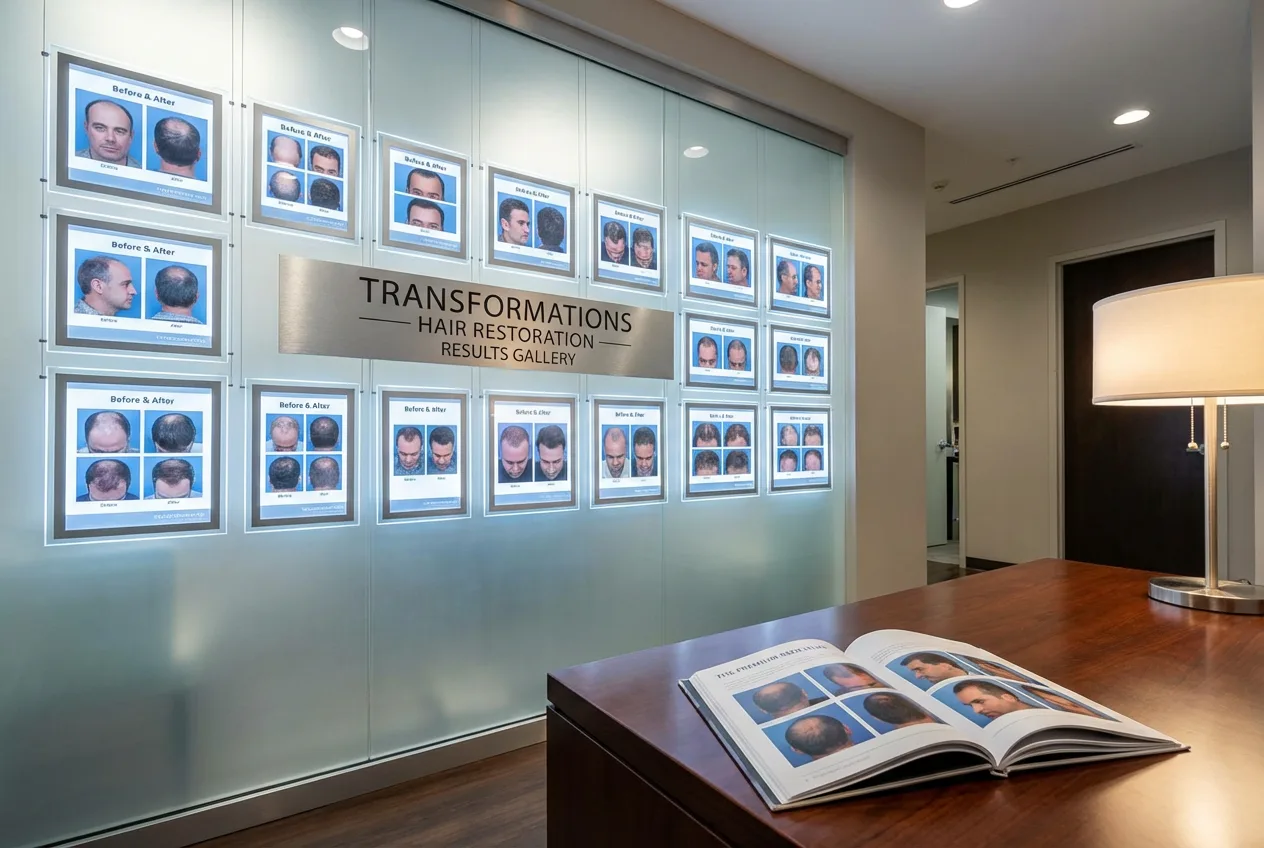
Key Takeaways
- Hair transplant clinics with professional results galleries convert 35-50% more consultation enquiries than those with inconsistent photos
- The 5-point documentation timeline (pre-op, post-op, 3, 6, and 12 months) is the gold standard for patient journey content
- Standardised angles, lighting, and positioning eliminate variables so the results — not the photography — are what patients compare
- GDPR-compliant consent processes and ASA-compliant imagery protect your practice from regulatory risk
- A single professional documentation setup creates a repeatable protocol your clinical team can maintain long-term
A potential patient sits at their laptop, researching hair transplant clinics. They have a budget of £5,000-£10,000. They will visit between 5 and 10 clinic websites in the next hour. The single biggest factor that determines which clinic wins their consultation booking is not price, not location, not even surgeon credentials — it is the quality and consistency of the before and after hair transplant photos in your results gallery. The UK hair restoration market has grown to an estimated £1.2 billion annually, and with patient demand continuing to rise, the clinics with the most compelling visual evidence of their results capture a disproportionate share of bookings.
Yet the majority of UK hair transplant clinics are still documenting results on smartphones, in inconsistent lighting, with varying angles and backgrounds. This isn't just a missed marketing opportunity — it actively undermines the clinical excellence these surgeons deliver every day.
See how In Focus by Zain photographs hair transplant clinics across the UK
View clinic photography workWhy Inconsistent Photos Are Losing You Patients
The Trust Gap in Hair Transplant Marketing
Hair transplant patients are among the most research-intensive consumers in aesthetic medicine. The average patient spends 3-6 months researching clinics before committing to a procedure. During this research phase, they compare results galleries obsessively. If your before-and-after images are inconsistent — different lighting, different angles, different backgrounds — patients cannot fairly evaluate your results. Worse, inconsistency breeds suspicion. "Are they hiding something?" "Have these photos been manipulated?" These doubts cost consultations.
In contrast, a results gallery with perfectly standardised photography communicates clinical rigour. It says: "We are confident in our results. We document them transparently. We have nothing to hide." This is the trust signal that converts browsers into booked patients.
What Prospective Patients Compare
Patients comparing hair transplant results are looking at specific details: hairline design, density achieved, donor area scarring, and natural growth direction. Inconsistent photography makes these comparisons impossible. A before photo taken under fluorescent lighting and an after photo taken in natural daylight will make even excellent results look questionable. Professional hair transplant photography UK eliminates these variables entirely, allowing your surgical skill to speak for itself.
The Professional Before and After Protocol
Standardised Angles and Positioning
Professional hair transplant documentation requires a minimum of five standardised angles:
- Frontal view — hairline assessment, forehead symmetry
- Left profile — temporal point and side density
- Right profile — matching assessment of opposite side
- Vertex (top-down) — crown coverage and density
- Donor area — scarring assessment and available supply
Each angle must be captured at an identical camera distance and height for every patient, every time. Many clinics achieve this with a fixed tripod position and floor markers for patient positioning — a setup that a specialist photographer will install and train your team to maintain.
Lighting for Scalp Photography
Scalp photography is technically demanding. Hair density, graft direction, and skin texture are all affected by lighting angle and quality. The standard is diffused, even lighting from multiple sources to eliminate harsh shadows that can hide or exaggerate density. Colour temperature must be consistent (typically 5500K daylight-balanced) to ensure accurate skin tone reproduction across documentation sessions months apart.
Timeline Documentation (Pre-op to 12 Months)
The gold standard documentation timeline for hair transplant results:
- Pre-operative baseline — comprehensive documentation before any intervention
- Immediately post-procedure — graft placement and donor area
- 3 months — early growth phase, managing patient expectations
- 6 months — significant growth visible, powerful comparison point
- 12 months — full maturation, definitive results for gallery
This 5-point timeline produces compelling patient journey content. When sequenced on your website, it tells a visual story that prospective patients can imagine themselves in — one of the most powerful conversion tools in hair transplant marketing.
Want standardised before and after photography for your clinic?
In Focus by Zain creates documentation protocols that your team can maintain long-term.
Get a Free QuoteBuilding a Results Gallery That Converts
Organising by Technique (FUE, FUT, SMP)
Your results gallery should be segmented by technique. Patients searching for FUE results want to see FUE results — not a mixed gallery where they cannot tell which technique was used. Each gallery section should include the Norwood classification, number of grafts, technique used, and timeline. This clinical transparency builds the confidence that leads to consultation bookings.
Norwood Scale Documentation
Documenting results by Norwood classification (Norwood II through VII) allows prospective patients to find cases that match their own pattern. A patient with Norwood III hair loss wants to see results on patients with similar starting conditions. Organising your gallery this way demonstrates clinical precision and makes it easy for patients to self-qualify — reducing wasted consultations and increasing booking quality.
Patient Consent and GDPR for Hair Transplant Photos
Under UK GDPR, patient photography constitutes special category personal data (health data). Your clinic must obtain explicit, informed written consent before capturing, storing, or publishing any patient imagery. The consent form must specify:
- How images will be used (website, social media, print, advertising)
- How long images will be retained
- The patient's right to withdraw consent at any time
- How images will be securely stored
For advertising specifically, the ASA CAP Code requires that before-and-after images represent typical results. The ASA has taken enforcement action against hair transplant clinics using exceptional cases as representative examples. Professional documentation that follows standardised protocols naturally produces honest, representative imagery that satisfies both GDPR and ASA requirements.
How In Focus by Zain Documents Hair Transplant Results
In Focus by Zain works with hair transplant clinics across London, Manchester, and Birmingham to establish professional documentation systems. Every engagement begins with a standardisation session — setting up the lighting rig, camera positions, and patient positioning protocol that your clinical team will use for ongoing documentation.
Beyond the initial setup, In Focus by Zain provides training for your clinical staff to maintain the protocol independently, plus quarterly review sessions to ensure consistency. This means your results gallery grows continuously with professional-standard imagery — not just from a single shoot, but as a permanent capability within your clinic.
Frequently Asked Questions
Book a Clinic Photography Consultation
In Focus by Zain documents hair transplant results for clinics across London, Manchester, and Birmingham. Establish your professional documentation protocol today.
Book Free Consultation